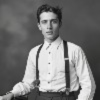

Oliver A Thompson
RAMC member | Medical Officers-205.12.1893
Biography
Oliver A. Thompson was born on May 12, 1893, in the bustling city of Chicago, Illinois, during a time when the nation was rapidly industrializing. His parents, Edward and Clara Thompson, came from immigrant backgrounds—Edward from England, where he had worked in textile mills, and Clara from Ireland, having fled the potato famine's aftermath. They settled in a working-class neighborhood on the city's South Side, where Edward found employment as a mechanic in one of the many factories producing machinery for the growing railroads. Clara, a skilled seamstress, supplemented the family income by mending clothes for neighbors while raising Oliver and his three siblings: two older brothers, James and Robert, and a younger sister, Eliza.
From his earliest years, Oliver displayed a keen curiosity about the world beyond his immediate surroundings. The family's small apartment overlooked busy streets filled with horse-drawn carts, street vendors, and the occasional automobile, which sparked his interest in capturing fleeting moments. He often spent afternoons wandering the nearby parks or the shores of Lake Michigan, sketching scenes with charcoal pencils borrowed from school. His mother encouraged this artistic bent, enrolling him in free drawing classes at a local community center when he was ten. These sessions introduced him to basic principles of light, shadow, and perspective, laying the groundwork for his future career.
School proved challenging for Oliver; he was an average student academically but excelled in subjects like history and geography, where he could immerse himself in stories of distant lands and past events. Teachers noted his vivid imagination, often reflected in essays about explorers like Lewis and Clark or the American Civil War. At age fourteen, he left formal education to help support the family after his father suffered a workplace injury that limited his ability to work full-time. Oliver took a job as a delivery boy for a local newspaper, the Chicago Tribune, where he first encountered the power of printed images to tell stories. Fascinated by the photographs accompanying articles on labor strikes and city expansions, he saved his earnings to buy a simple box camera by age sixteen.
This acquisition marked the beginning of his serious pursuit of photography. He experimented with portraits of family members and street scenes, developing film in a makeshift darkroom set up in the family's basement. Recognizing his talent, a neighbor who owned a small photography studio offered him an apprenticeship in 1911. Under the guidance of Mr. Harold Jenkins, a veteran portrait photographer, Oliver learned the intricacies of wet-plate processes, lens adjustments, and chemical development. He spent long hours assisting with weddings, family sittings, and commercial shoots for local businesses, honing his skills in composition and timing.
In early 1912, at just sixteen years old, Thompson's growing reputation led to an opportunity to travel abroad. He boarded the RMS Titanic as a junior assistant to a British photographer documenting the ship's maiden voyage from Southampton to New York. On the night of April 14, as the liner struck an iceberg and began to sink in the North Atlantic, Thompson captured several images of the unfolding disaster. Amid the confusion below decks, he photographed panicked passengers in corridors and gathering points. Tragically, only one of these pictures survived the ordeal—an interior shot showing a crowded staircase with people rushing toward lifeboats, their faces etched with fear. Thompson himself escaped on a lifeboat, his camera damaged but that single negative preserved in a waterproof case.
By 1913, back in Chicago and recovering from the experience, Thompson resumed freelance work, selling photographs to magazines like Collier's and local papers that covered urban life, including the harsh realities of tenement housing and factory conditions during the Progressive Era. His early portfolio focused on social issues, influenced by photographers like Jacob Riis, whose work on poverty he admired. He documented immigrant communities in Chicago, capturing images of children playing in alleys, workers on lunch breaks, and community gatherings. These efforts earned him modest recognition, with several photos published in reform-minded journals.
The outbreak of World War I in Europe in 1914 ignited a new direction. Newsreels and reports of the conflict stirred his sense of adventure and duty. Believing photography could humanize the war for Americans, he saved diligently and, in early 1915, at age nineteen, sailed to England to volunteer as a correspondent. Arriving in London amid air raid warnings, Thompson quickly networked with journalists and secured assignments from American wire services. He embedded with British and French troops on the Western Front, enduring mud-filled trenches and artillery barrages to photograph soldiers in moments of respite—sharing meals, writing letters home, or tending to the wounded. His images, often taken under fire, conveyed the grit and camaraderie of wartime life without glorifying the violence. Publications back home, such as The New York Times and Life magazine precursors, praised his work for its authenticity and emotional depth, building his reputation as a daring young photographer with unflinching resolve.
By mid-1916, Thompson shifted to covering naval and medical aspects of the war. He joined efforts to document hospital ships aiding the Allied cause in the Mediterranean. This led him to board the HMHS Britannic, sister ship to the Titanic, which had been repurposed as a floating hospital. On November 21, 1916, while en route to collect wounded from the Gallipoli campaign near the Greek island of Kea, the vessel struck a German mine. As alarms blared and the ship listed sharply, chaos ensued with crew and medical staff rushing to lifeboats. Amid the panic, Thompson grabbed his camera and captured several poignant images: the massive hull tilting against the sea, passengers clinging to rails, lifeboats being lowered into choppy waters, and survivors treading amid debris. These photographs, taken at great personal risk, provided a rare visual account of the sinking before he himself evacuated to safety.
From his earliest years, Oliver displayed a keen curiosity about the world beyond his immediate surroundings. The family's small apartment overlooked busy streets filled with horse-drawn carts, street vendors, and the occasional automobile, which sparked his interest in capturing fleeting moments. He often spent afternoons wandering the nearby parks or the shores of Lake Michigan, sketching scenes with charcoal pencils borrowed from school. His mother encouraged this artistic bent, enrolling him in free drawing classes at a local community center when he was ten. These sessions introduced him to basic principles of light, shadow, and perspective, laying the groundwork for his future career.
School proved challenging for Oliver; he was an average student academically but excelled in subjects like history and geography, where he could immerse himself in stories of distant lands and past events. Teachers noted his vivid imagination, often reflected in essays about explorers like Lewis and Clark or the American Civil War. At age fourteen, he left formal education to help support the family after his father suffered a workplace injury that limited his ability to work full-time. Oliver took a job as a delivery boy for a local newspaper, the Chicago Tribune, where he first encountered the power of printed images to tell stories. Fascinated by the photographs accompanying articles on labor strikes and city expansions, he saved his earnings to buy a simple box camera by age sixteen.
This acquisition marked the beginning of his serious pursuit of photography. He experimented with portraits of family members and street scenes, developing film in a makeshift darkroom set up in the family's basement. Recognizing his talent, a neighbor who owned a small photography studio offered him an apprenticeship in 1911. Under the guidance of Mr. Harold Jenkins, a veteran portrait photographer, Oliver learned the intricacies of wet-plate processes, lens adjustments, and chemical development. He spent long hours assisting with weddings, family sittings, and commercial shoots for local businesses, honing his skills in composition and timing.
In early 1912, at just sixteen years old, Thompson's growing reputation led to an opportunity to travel abroad. He boarded the RMS Titanic as a junior assistant to a British photographer documenting the ship's maiden voyage from Southampton to New York. On the night of April 14, as the liner struck an iceberg and began to sink in the North Atlantic, Thompson captured several images of the unfolding disaster. Amid the confusion below decks, he photographed panicked passengers in corridors and gathering points. Tragically, only one of these pictures survived the ordeal—an interior shot showing a crowded staircase with people rushing toward lifeboats, their faces etched with fear. Thompson himself escaped on a lifeboat, his camera damaged but that single negative preserved in a waterproof case.
By 1913, back in Chicago and recovering from the experience, Thompson resumed freelance work, selling photographs to magazines like Collier's and local papers that covered urban life, including the harsh realities of tenement housing and factory conditions during the Progressive Era. His early portfolio focused on social issues, influenced by photographers like Jacob Riis, whose work on poverty he admired. He documented immigrant communities in Chicago, capturing images of children playing in alleys, workers on lunch breaks, and community gatherings. These efforts earned him modest recognition, with several photos published in reform-minded journals.
The outbreak of World War I in Europe in 1914 ignited a new direction. Newsreels and reports of the conflict stirred his sense of adventure and duty. Believing photography could humanize the war for Americans, he saved diligently and, in early 1915, at age nineteen, sailed to England to volunteer as a correspondent. Arriving in London amid air raid warnings, Thompson quickly networked with journalists and secured assignments from American wire services. He embedded with British and French troops on the Western Front, enduring mud-filled trenches and artillery barrages to photograph soldiers in moments of respite—sharing meals, writing letters home, or tending to the wounded. His images, often taken under fire, conveyed the grit and camaraderie of wartime life without glorifying the violence. Publications back home, such as The New York Times and Life magazine precursors, praised his work for its authenticity and emotional depth, building his reputation as a daring young photographer with unflinching resolve.
By mid-1916, Thompson shifted to covering naval and medical aspects of the war. He joined efforts to document hospital ships aiding the Allied cause in the Mediterranean. This led him to board the HMHS Britannic, sister ship to the Titanic, which had been repurposed as a floating hospital. On November 21, 1916, while en route to collect wounded from the Gallipoli campaign near the Greek island of Kea, the vessel struck a German mine. As alarms blared and the ship listed sharply, chaos ensued with crew and medical staff rushing to lifeboats. Amid the panic, Thompson grabbed his camera and captured several poignant images: the massive hull tilting against the sea, passengers clinging to rails, lifeboats being lowered into choppy waters, and survivors treading amid debris. These photographs, taken at great personal risk, provided a rare visual account of the sinking before he himself evacuated to safety.